
The Truth About GLP-1 Weight Loss Medications: What You Need to Know
- wellwisepharm
- Jul 31
- 4 min read
GLP-1 weight loss medications have become one of the most talked-about advancements in weight management. Originally developed to help manage type 2 diabetes, these medications are now helping many people achieve significant weight loss when combined with healthy lifestyle changes.
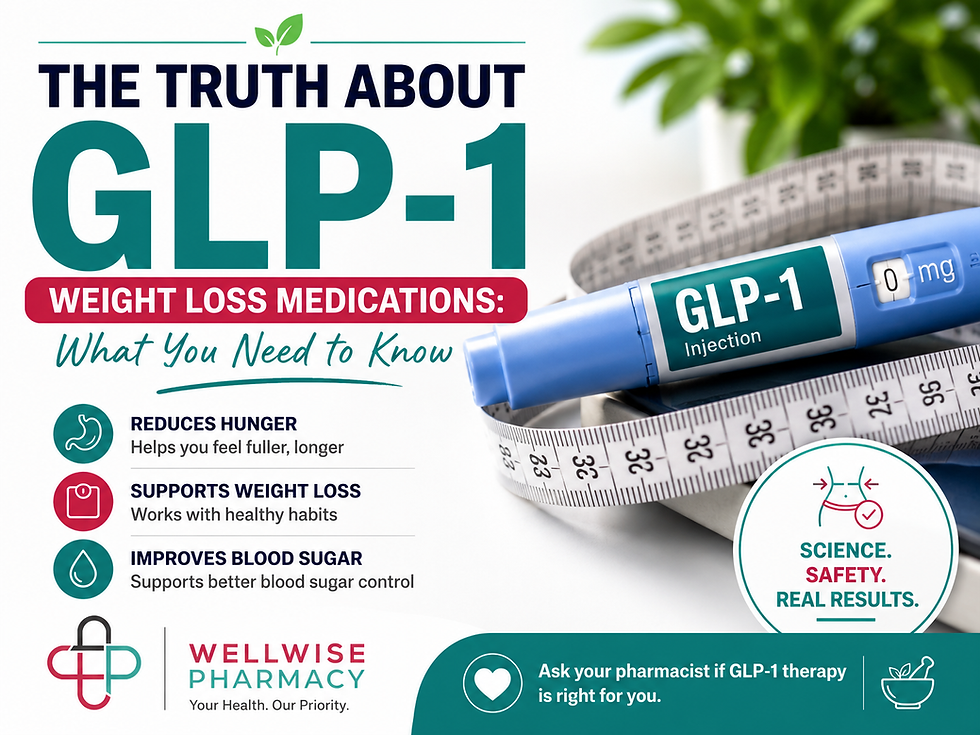
While the growing popularity of GLP-1 medications has sparked interest, it's also created confusion. Questions about how they work, who they're for, their safety, and potential side effects are common.
Understanding the facts can help you make informed decisions about whether GLP-1 therapy may be an appropriate option for your weight loss journey.
What Are GLP-1 Weight Loss Medications?
GLP-1 stands for Glucagon-Like Peptide-1, a hormone naturally produced in the body that helps regulate blood sugar levels, appetite, and digestion.
GLP-1 medications mimic this natural hormone to help patients:
Feel fuller for longer
Reduce hunger and food cravings
Slow stomach emptying
Improve blood sugar control
Support gradual, sustainable weight loss
Some GLP-1 medications are approved specifically for chronic weight management, while others are prescribed to help manage diabetes and may also promote weight loss.
How Do GLP-1 Medications Work?
Unlike many traditional weight loss methods that rely solely on willpower, GLP-1 medications work by supporting the body's natural appetite-regulating system.
These medications help:
Reduce Appetite
GLP-1 medications act on areas of the brain responsible for hunger, helping people feel satisfied with smaller portions.
Slow Digestion
Food stays in the stomach longer, promoting fullness after meals and reducing unnecessary snacking.
Improve Blood Sugar Regulation
By supporting insulin release and reducing excess glucose production, GLP-1 medications also help maintain healthier blood sugar levels.
Together, these effects can make healthy eating habits easier to maintain over time.
Who May Benefit from GLP-1 Therapy?
GLP-1 medications may be appropriate for adults who struggle with obesity or excess weight and have not achieved desired results through diet and exercise alone.
Healthcare providers may recommend GLP-1 therapy for individuals who:
Have a Body Mass Index (BMI) of 30 or higher
Have a BMI of 27 or higher with weight-related health conditions
Have type 2 diabetes and need improved blood sugar management
Are committed to making long-term lifestyle changes
Because every patient is different, treatment decisions should always be made in consultation with a qualified healthcare professional.
Benefits of GLP-1 Weight Loss Medications
When prescribed appropriately and combined with healthy lifestyle habits, GLP-1 medications can provide several benefits.
Clinically Proven Weight Loss
Clinical studies have shown that many patients experience meaningful weight loss over time when following prescribed treatment plans.
Better Blood Sugar Control
Many GLP-1 medications improve blood sugar management, making them beneficial for individuals with type 2 diabetes.
Reduced Hunger
Patients often report feeling less hungry throughout the day, making portion control more manageable.
Improved Heart Health
Some GLP-1 medications have been shown to reduce the risk of major cardiovascular events in certain patients with diabetes and established heart disease.
Support for Long-Term Lifestyle Changes
By reducing appetite, GLP-1 therapy may help patients develop healthier eating habits that support lasting weight management.
Are There Any Side Effects?
Like all medications, GLP-1 therapies may cause side effects.
Common side effects include:
Nausea
Vomiting
Diarrhoea
Constipation
Stomach discomfort
Reduced appetite
These symptoms are often mild and improve as the body adjusts to treatment.
Patients should contact their healthcare provider if side effects become severe or persistent.
Common Myths About GLP-1 Medications
Myth 1: They Are a "Magic Weight Loss Shot"
Fact: GLP-1 medications work best when combined with healthy eating, regular physical activity, and long-term lifestyle changes.
Myth 2: Anyone Can Take Them
Fact: These medications are not suitable for everyone. A healthcare provider will evaluate your medical history and overall health before prescribing them.
Myth 3: Weight Loss Happens Immediately
Fact: Healthy weight loss takes time. Most patients experience gradual progress over several months.
Myth 4: You Never Need Lifestyle Changes
Fact: Long-term success depends on maintaining healthy habits alongside medication.
Healthy Habits That Improve Results
GLP-1 medications are most effective when paired with positive lifestyle choices.
Consider:
Eating balanced, nutrient-rich meals
Drinking plenty of water
Consciously include strength training to maintain body mass
Getting enough sleep
Managing stress
Following your healthcare provider's recommendations
These habits can improve both weight loss results and overall health.
Questions to Ask Your Healthcare Provider
If you're considering GLP-1 therapy, ask:
Am I a good candidate for GLP-1 medications?
Which medication may be right for me?
What side effects should I expect?
How long will treatment last?
How should I adjust my diet while taking this medication?
Will this medication interact with my current prescriptions?
How will my progress be monitored?
Having an open conversation can help ensure safe and effective treatment.
How Your Pharmacy Can Help
Medication Education
Email us for an infographic outlining GLP-1 research in a digestible format to share with friends & family!
Ongoing Support
Regular follow-ups with your pharmacist can help address questions about side effects, proper injection techniques, missed doses, and medication adherence.
Lifestyle Guidance
Many pharmacies offer wellness resources and can provide advice on healthy habits that complement your treatment plan.
Convenient Prescription Services
Your local pharmacy can help with prescription refills, medication reminders, insurance assistance, and home delivery options when available.
Final Thoughts
GLP-1 weight loss medications have transformed the way obesity and weight-related health conditions are managed. When used under the guidance of a qualified healthcare provider, they can be an effective tool for achieving meaningful, long-term weight loss.
However, they are not a quick fix. The best results come from combining medication with healthy eating, regular physical activity, and ongoing medical support.
If you're interested in learning whether GLP-1 therapy is right for you, speak with your healthcare provider or pharmacist. They can help you understand your options and develop a personalised plan that supports your long-term health goals.
Sources
U.S. Food & Drug Administration (FDA) – GLP-1 Receptor Agonists
National Institute of Diabetes and Digestive and Kidney Diseases (NIDDK) – Prescription Medications to Treat Overweight & Obesity
American Diabetes Association (ADA) – Standards of Care in Diabetes
Centers for Disease Control and Prevention (CDC) – Healthy Weight
Obesity Medicine Association – GLP-1 Medications


Comments